
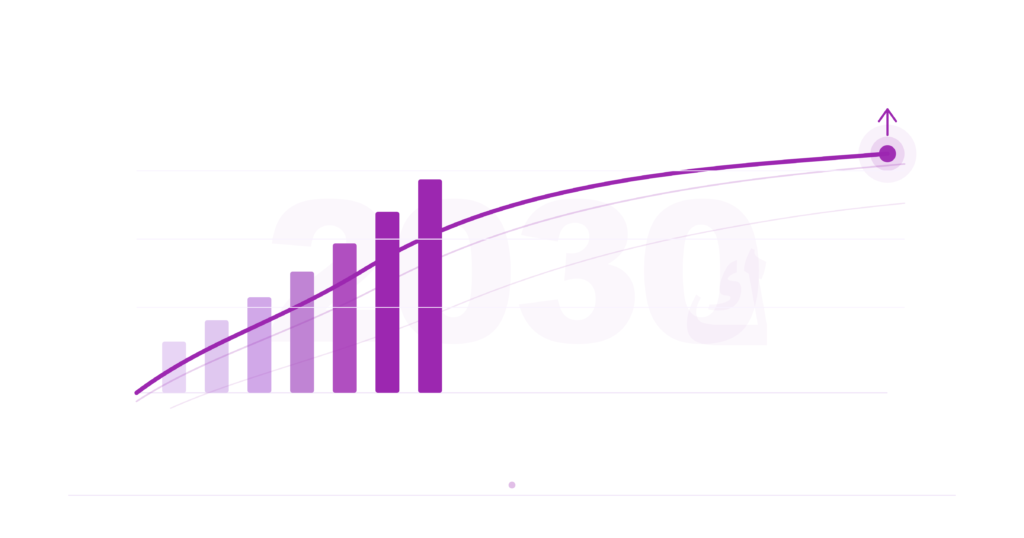
Saudi Arabia has always been a land of ambition. For decades the Kingdom built its global standing on oil. Today, a different kind of resource is taking center stage: artificial intelligence.
In March 2026, the Saudi Council of Ministers, under Crown Prince Mohammed bin Salman, designated 2026 the Year of Artificial Intelligence. This was not a symbolic gesture. It was a declaration that AI automation has moved from the margins of government planning to the very core of the national agenda.
Vision 2030, the sweeping economic blueprint launched in 2016, set a clear mission: reduce Saudi Arabia’s dependence on oil, build a knowledge economy, and position the Kingdom as a global leader. After nearly a decade of execution, AI and automation have become the engine that powers almost every goal in that plan.
This article covers everything you need to know: what Saudi Arabia is actually doing with AI, which sectors are changing the fastest, what challenges remain, and why businesses operating in the Kingdom need to pay close attention right now.
Key Numbers at a Glance (2026)
- $235.2B AI’s projected contribution to Saudi GDP by 2030 (PwC)
- $9.1B Funding secured by AI companies in the Kingdom in 2025
- 664 Companies working in data and AI in Saudi Arabia
- 1M+ Saudi citizens trained in AI through the SAMAI initiative
- #14 Saudi Arabia’s global rank in the 2025 Global AI Index
- 56% Rise in government spending on emerging technologies in 2024
Understanding Vision 2030 and the Role of AI
What is Vision 2030?
Vision 2030 is Saudi Arabia’s national transformation plan, announced by Crown Prince Mohammed bin Salman in 2016. Its three main goals are: diversify the economy beyond oil, develop public sector efficiency, and build a thriving society. The plan covers more than a dozen major sectors including tourism, entertainment, healthcare, education, manufacturing, and financial services.
At launch, AI was an enabling tool. By 2024, it had become a strategic pillar. Sixty-six of Vision 2030’s 96 national goals are now linked to data and artificial intelligence, according to Sawt’s founders. That number tells you how deeply the technology has been woven into the country’s roadmap.
The National Strategy for Data and Artificial Intelligence (NSDAI)
In 2020, Saudi Arabia launched the National Strategy for Data and Artificial Intelligence, led by the Saudi Data and Artificial Intelligence Authority (SDAIA). The strategy is built around six pillars:
- Ambition: setting world-class targets for AI adoption and impact
- Competencies: building a skilled local AI workforce
- Policies: creating smart, ethical regulations for responsible AI use
- Investment: directing public and private capital into AI infrastructure
- Innovation: supporting AI research, startups, and applied development
- Ecosystem: connecting government, private sector, and international partners
SDAIA sits at the center of this plan. Chaired directly by the Crown Prince, it operates through two subsidiaries: the National Data Management Office (NDMO), which handles data governance and privacy law, and the National Center for AI (NCAI), which drives research and adoption.
Key Insight: The fact that the Crown Prince chairs SDAIA personally signals that AI is not a ministry-level priority in Saudi Arabia. It is a national leadership priority.
Massive Infrastructure: Building the Physical Layer for AI
You cannot run a serious AI economy without serious infrastructure. Saudi Arabia understood this early and moved fast.
The Hexagon Data Center
In early 2026, Saudi Arabia inaugurated the Hexagon data center, described as the world’s largest government data center, with a capacity of 480 megawatts. To put that in context, most hyperscale data centers run between 50 and 200 megawatts. Hexagon is in a different category entirely.
The facility is designed to handle the enormous computing demands of AI model training, government digital services, and cloud infrastructure. It is not just an IT building. It is national infrastructure on the scale of a highway network or power grid.
Shaheen III Supercomputer
Alongside Hexagon, Saudi Arabia launched the Shaheen III supercomputer, significantly upgrading the Kingdom’s raw computing power for scientific research, AI model development, and complex data analysis. Supercomputers matter because large AI models require enormous parallel processing power. Countries that own this compute have a structural advantage in developing and running AI systems.
HUMAIN: The Saudi AI Champion
In May 2025, Crown Prince Mohammed bin Salman launched HUMAIN, the Public Investment Fund’s full-stack AI national company. HUMAIN’s mandate is unusually broad: build data centers, develop cloud infrastructure, create foundation AI models, and deploy applied AI products and services.
To anchor HUMAIN’s compute infrastructure, Saudi Arabia partnered with NVIDIA for a framework covering up to 600,000 chips, one of the largest chip procurement agreements in the world. Microsoft confirmed in February 2026 that its Saudi Arabia East data center region will be available from Q4 2026, adding a commercial hyperscale layer to the Kingdom’s sovereign infrastructure.
HUMAIN’s CEO Tareq Amin has stated the company aims to become the world’s third-largest AI provider, behind only the United States and China. That is a bold claim. But when you look at the compute, the capital, and the political will backing it, the ambition is not baseless.
Why This Matters: Countries that build AI infrastructure now will have lower costs and higher capabilities for decades. Saudi Arabia is doing what took the US and China years to build, but compressing the timeline with deliberate capital allocation.
Sector-by-Sector: Where AI Automation is Already Working
Healthcare
Saudi Arabia’s healthcare sector is one of the most active areas of AI deployment. AI tools are being used to improve diagnostic accuracy, predict disease progression, personalize treatment plans, and manage hospital operations more efficiently.
AI-powered platforms are helping doctors identify conditions earlier, which improves patient outcomes and reduces the cost of late-stage treatment. The SEHA Virtual Hospital, one of the region’s most advanced digital health platforms, uses AI to connect patients with specialists remotely, reducing pressure on physical facilities.
Appointment booking, patient follow-ups, and prescription reminders are increasingly handled by AI-powered voice agents and chatbots. This frees up medical staff to focus on clinical work rather than administrative tasks. For clinics and hospitals in Riyadh, Jeddah, and across the Kingdom, this kind of automation is already a daily reality rather than a pilot program.
Education
Education is central to Vision 2030 because the entire economic transformation depends on having a skilled, tech-literate workforce. AI is being used at every level of the system.
The Saudi Ministry of Education has introduced AI literacy programs for more than six million school students. At the university level, AI-focused programs are expanding, and Oracle’s Mostaqbali initiative is set to train 50,000 Saudis in AI and emerging technologies by 2027.
The SDAIA-led SAMAI (One Million Saudis in AI) initiative has already registered more than one million citizens in AI fundamentals training within a single year. A second phase, SAMAI 2, was launched in partnership with 11 government ministries and focuses on embedding AI competencies directly into existing government roles rather than just creating new positions.
In early 2026, SDAIA launched the SDAIA Applied AI Bootcamp in Riyadh, offering intensive hands-on training for aspiring data scientists and AI engineers. More than 11,000 specialists have been trained in advanced AI fields through university partnerships and the SDAIA Academy.
Government Services and Public Administration
The Saudi government has moved faster on AI adoption than many national governments worldwide. SDAIA’s Estishraf platform has generated over SAR 51 billion in cost savings for more than 121 government agencies. The Tawakkalna app, originally built for COVID-19 management, now serves over 34 million users and offers more than 1,000 government services, many of them powered by AI.
AI tools are being used to automate permit applications, license renewals, citizen support queries, and public service delivery. The goal is to reduce processing times, cut administrative costs, and improve the citizen experience without requiring a proportional increase in civil service headcount.
During the Hajj and Umrah seasons, when Mecca and Medina host millions of pilgrims, SDAIA uses AI for crowd management, logistics coordination, and safety monitoring. This is one of the world’s most complex real-time human management challenges, and AI has become a core part of handling it.
Finance and Banking
Saudi Arabia’s banking and financial services sector is using AI for fraud detection, credit scoring, customer service automation, loan application processing, and investment analysis. Islamic finance institutions are exploring AI-driven tools for Shariah-compliant product design and regulatory compliance.
The Kingdom’s Personal Data Protection Law (PDPL) governs how financial institutions collect and use customer data, and AI systems deployed in this sector must comply with these regulations. This has pushed local banks to develop or partner with regionally-compliant AI vendors rather than relying solely on global platforms.
Tourism and Hospitality
Vision 2030 set an ambitious target of attracting 150 million visitors annually by 2030. The Ministry of Tourism is using AI-driven automation to personalize visitor experiences, optimize hotel and attraction capacity management, and power multilingual customer service at scale.
From AI-powered recommendation engines to automated hotel check-in systems and predictive pricing tools, the hospitality sector is being reshaped. For a country building a tourism industry largely from scratch within a decade, AI gives a significant shortcut to operational sophistication.
Smart Cities: NEOM and Beyond
NEOM is the most visible symbol of Saudi Arabia’s ambition. This futuristic city project, being built in the northwest of the Kingdom, is designed from the ground up with AI embedded into every system: transportation, energy, waste management, public safety, and citizen services.
AI will power NEOM’s real-time data analytics, predictive infrastructure maintenance, and autonomous mobility systems. Other Vision 2030 urban projects, including the Riyadh urban development and Red Sea tourism destination, also incorporate smart city principles where AI enables more efficient resource use and better quality of life.
Energy and Sustainability
Saudi Arabia is using AI to optimize oil and gas production while simultaneously driving its renewable energy ambitions. Companies like ACWA Power are deploying AI to manage energy and water operations more efficiently, directly supporting the Kingdom’s sustainability and efficiency goals.
Ma’aden, Saudi Arabia’s state mining company, uses Microsoft-powered AI tools to automate routine tasks, extract operational insights, and save thousands of working hours. This kind of industrial AI deployment is accelerating across the energy and mining sectors.
The AI Voice Agent Revolution in Saudi Arabia
One of the fastest-growing categories of AI automation in Saudi Arabia right now is the AI voice agent. If you run a business that handles customer calls, appointment bookings, lead follow-ups, or customer support, this technology directly affects you.
Why Voice AI Matters in the Saudi Market
Voice is a natural interface for Arabic speakers. The Arabic language, with its rich dialects, formal registers, and cultural communication norms, has historically been underserved by global AI platforms designed primarily for English. Saudi dialect in particular has specific phonetics and expressions that generic AI voice tools often mishandle.
This created a clear market need: AI voice agents built specifically for Saudi Arabic, trained on real Saudi dialect conversations, and designed around the communication expectations of Saudi customers. That market is now being filled rapidly.
Businesses across Saudi Arabia are discovering that AI voice agents can answer customer calls instantly, qualify leads in real time, book appointments automatically, handle after-hours inquiries without extra staffing costs, and do all of this in natural-sounding Saudi Arabic. The combination of instant response, 24/7 availability, and local language fluency solves three of the most common pain points for Saudi businesses at once.
The Market Opportunity
According to industry analysts, the GCC AI call center automation market is valued at between $800 million and $1.2 billion. Saudi Arabia, as the region’s largest economy, represents the biggest portion of that opportunity. Several Saudi-born and GCC-focused startups have emerged to capture it, and the investment is following.
Saudi voice AI startup Sawt raised a $1 million pre-seed round led by T2 and STV’s AI Fund in 2025, just two months after launching. Within that time the platform had already powered hundreds of thousands of voice interactions for dozens of businesses. Sawt’s founders note that 66 of Vision 2030’s 96 goals are tied to data and AI, and they see voice AI as one of the most accessible entry points for businesses across every sector.
Ehlan.ai: The Saudi Voice Agent Built for Real Saudi Businesses
Featured Solution: Ehlan.ai is an AI voice agent platform built specifically for Saudi Arabia, trained on Saudi dialect, and designed to handle the real communication challenges Saudi businesses face every day.
One platform stands out for businesses looking for a practical, fast-to-deploy Arabic AI voice agent: Ehlan.ai.
Ehlan.ai is built for Saudi Arabia from the ground up. Its AI voice agents speak natural Saudi dialect, understand the communication style and cultural expectations of Saudi customers, and can be deployed across phone calls, WhatsApp, and SMS from a single platform. Unlike global AI tools that treat Arabic as an afterthought or a translation layer, Ehlan.ai was designed specifically for the Saudi market.
The platform solves the most common operational challenges Saudi businesses face. Missed calls after hours? Ehlan.ai answers every call instantly, around the clock. Slow lead follow-up from web forms or WhatsApp inquiries? The agent responds within seconds, qualifies the prospect in Saudi Arabic, and books demos while the sales team is offline. High receptionist costs with staff turnover and overhead? Businesses using Ehlan.ai typically reduce receptionist costs by 40 to 70 percent.
Here is what makes Ehlan.ai different from generic AI tools: the system understands Saudi dialect naturally from the first word, eliminates the misunderstandings that come from poorly trained Arabic AI, and has already proven itself with clinics in Riyadh, service businesses across the Kingdom, and companies handling daily customer call volumes that would normally require a full front-desk team.
A real example: a clinic in Riyadh implemented Ehlan.ai and now handles patient appointment booking automatically, 24 hours a day, with accurate Saudi dialect recognition. The reception team focuses entirely on in-person patient care. Setup was completed in hours, not weeks.
If your business receives customer calls, manages bookings, or needs to follow up on leads in Saudi Arabic, Ehlan.ai is worth a serious look. You can experience a live conversation with the AI agent and calculate your specific cost savings at ehlan.ai.
Investment and the Startup Ecosystem
Saudi Arabia is not just building AI capacity for its own use. It is positioning itself as a destination for global AI investment and a launchpad for regional AI companies.
Foreign Direct Investment in AI
In 2024, Saudi Arabia received SAR 119 billion (approximately $31.7 billion) from foreign investors, a 24 percent increase from the previous year. A significant portion of this capital has gone into technology and AI infrastructure.
The country has attracted investment and partnerships from the world’s largest technology companies. In 2024, Microsoft announced a multi-billion dollar investment in Saudi cloud and AI infrastructure. NVIDIA committed to a major chip supply partnership with HUMAIN. Alibaba Cloud partnered with Saudi entities on an AI empowerment program to train local talent while providing cloud services for projects like NEOM.
The Saudi AI Startup Scene
The local startup ecosystem is developing fast. The Kingdom’s VC fund Prosperity7 joined a $400 million investment round in Chinese generative AI startup Zhipu AI. PIF subsidiary Alat inked a $200 billion deal with China’s Dahua Technology to build a global smart technology manufacturing center. The NEOM Investment Fund injected $100 million into Pony.ai for autonomous vehicle development.
Inside the Kingdom, a new generation of Saudi AI companies is being built. Voice AI startups like Sawt and Ehlan.ai are competing for the customer communications automation market. Arabic large language model research, including projects like AceGPT developed with KAUST and Chinese university partners, is building the foundation layer for Saudi-specific AI applications. By 2026, 664 companies are operating in data and AI in the Kingdom.
The National AI Fund
Reports from early 2024 describe PIF and Andreessen Horowitz in discussions about a $40 billion AI-focused fund, which would be the largest single AI fund globally. Whether or not those specific discussions produce the reported outcome, they illustrate the scale of capital Saudi Arabia is willing to deploy in this space.
Workforce Development and the Saudi AI Talent Pipeline
Every serious AI strategy eventually comes down to people. Technology can be bought. Talent must be developed. Saudi Arabia has invested more deliberately in AI workforce development than almost any country of comparable size.
The SAMAI Initiative
The SAMAI (One Million Saudis in AI) initiative is one of the largest national AI literacy programs in the world. Launched by SDAIA in partnership with the Ministry of Education and the Ministry of Human Resources and Social Development, the first phase registered more than one million citizens in AI fundamentals training within a single year.
SAMAI 2 expanded the program by partnering with 11 government ministries and focusing on embedding AI skills into existing roles across the public sector. This is a smart design: rather than creating new AI departments that sit separately from operations, it builds AI competency into the people already running government services.
University Programs and Specialist Training
More than 11,000 specialists have been trained in advanced AI fields through university programs, international partnerships, and the SDAIA Academy. The King Abdullah University of Science and Technology (KAUST) collaborates with international partners on cutting-edge AI research. Saudi universities are expanding their AI and data science curricula at every level.
Addressing the Gender Gap
Vision 2030 includes an explicit goal of increasing female workforce participation, and AI training programs reflect this. The Elevate program aims to train 25,000 women in data and AI, providing skills for careers in one of the fastest-growing fields in the economy. This is both a social equity initiative and a practical workforce expansion strategy for a country that needs more AI practitioners than it currently has.
Ethics, Regulation, and Responsible AI
Rapid AI adoption creates real risks: bias in automated decision-making, data privacy violations, lack of transparency in AI systems, and potential job displacement. Saudi Arabia has put governance frameworks in place to manage these risks, though the challenge of keeping regulation current with fast-moving technology is ongoing.
The Personal Data Protection Law (PDPL)
Saudi Arabia’s Personal Data Protection Law, enforced by the National Data Management Office under SDAIA, governs how organizations collect, store, process, and share personal data. AI systems that use personal data in customer interactions, healthcare records, financial transactions, or government services must comply with PDPL requirements. This means businesses deploying AI tools in the Kingdom need to ensure their chosen platforms have local data residency options and Saudi-compliant data handling practices.
AI Ethics Principles and International Cooperation
SDAIA has developed AI Ethics Principles focusing on privacy, fairness, transparency, and sustainable digital development. Saudi Arabia endorsed the Bletchley Declaration at the 2023 AI Safety Summit, committing to responsible and human-centric AI governance. The Kingdom also participated in the Digital Cooperation Organization and launched a new AI ethics tool to help governments ensure AI systems align with human rights principles.
In 2025, Saudi Arabia became the first Arab nation to join the Global Partnership on AI (GPAI), a multilateral forum including the United States, United Kingdom, France, Japan, and 24 other nations. This membership connects Saudi Arabia to global conversations about AI standards, safety, and governance.
The International Center for AI Research and Ethics (ICAIRE)
Saudi Arabia has established the International Center for Artificial Intelligence Research and Ethics under UNESCO supervision. SDAIA’s three Global AI Summits since 2020 have attracted more than 100,000 participants and produced concrete outputs on AI ethics frameworks. These are not just diplomatic exercises: they feed directly into Saudi Arabia’s domestic governance approach.
For Businesses: If you are deploying AI tools in Saudi Arabia, data residency, PDPL compliance, and ethical AI practices are not optional. They are legal requirements and increasingly a competitive differentiator.
Challenges and Gaps Saudi Arabia Needs to Address
The story of Saudi Arabia’s AI rise is genuinely impressive. But honest analysis requires naming the gaps too.
Infrastructure Readiness in the Private Sector
According to Cisco’s AI Readiness Index, only 22 percent of Saudi companies have highly scalable AI infrastructure. This means the majority of Saudi businesses, especially small and medium enterprises (SMEs), are not yet equipped to take full advantage of AI automation. Government entities have moved faster than the private sector, and bridging that gap is one of the major challenges facing Vision 2030 execution.
Arabic Language AI Quality
While significant progress has been made on Arabic AI, including Saudi-specific models like ALLaM and AceGPT, the quality of AI for Arabic is still catching up to English-language AI. Arabic is a morphologically complex language with many dialects, and training effective models requires large, high-quality datasets of real Arabic conversations. The gap is closing, but it is not yet closed.
Talent Competition
Saudi Arabia is training more AI talent than ever before, but global competition for skilled AI practitioners is intense. Companies and governments worldwide are competing for the same pool of data scientists, machine learning engineers, and AI product specialists. The Kingdom’s ability to retain locally-trained talent and attract international experts will be tested as the ecosystem scales.
Workforce Transition
AI automation creates efficiency. It also displaces some categories of jobs. Roles involving routine data entry, basic administrative tasks, and repetitive customer service interactions are the most exposed. Saudi Arabia’s Saudization policies and workforce development programs are designed to manage this transition, but the pace of AI adoption may outrun the pace of retraining in some sectors.
What This Means for Businesses Operating in Saudi Arabia
If you run a business in Saudi Arabia, or plan to, understanding the AI transformation is not optional background knowledge. It is a strategic necessity.
The Competitive Pressure is Real
As AI adoption spreads, businesses that automate efficiently will operate with lower costs, faster response times, and better customer experiences than those that do not. In a market where 42 percent of Saudi citizens already used generative AI for professional purposes in 2024, customers are increasingly comfortable with AI interactions. They expect fast responses, personalized service, and 24/7 availability.
Start with Operational Pain Points
Most businesses should start AI adoption where the pain is most acute. For many Saudi businesses, that is customer communications: missed calls, slow lead follow-up, after-hours gaps, and the high cost of maintaining a reception or call center team. AI voice agents solve all of these problems with low implementation risk and measurable return on investment.
This is why tools like Ehlan.ai are gaining traction fast. They solve a real, immediate problem with a proven technology, in the language Saudi customers actually speak, without requiring a major technology project or a dedicated AI team.
Compliance is Non-Negotiable
Whatever AI tools you deploy, ensure they are compliant with Saudi Arabia’s PDPL and any sector-specific regulations. Use platforms with Saudi or regional data residency. Understand how your AI systems handle customer data and be prepared to explain this to regulators and customers.
The Window for Early Advantage is Open, But Not Forever
Saudi Arabia is in the middle of one of the most concentrated periods of AI adoption in any national economy in history. Businesses that move now will build operational capabilities, customer relationships, and institutional knowledge that will be difficult for later movers to replicate. Those who wait will face a more competitive landscape and higher adoption costs as early movers lock in market position.
Looking Ahead: Saudi Arabia’s AI Trajectory to 2030 and Beyond
The designation of 2026 as the Year of Artificial Intelligence was not the peak of Saudi Arabia’s AI ambition. It was a checkpoint, signaling that the infrastructure is in place and the execution phase has begun in full.
The GDP Target
AI is projected to contribute SAR 74 billion (approximately $19.7 billion) to Saudi Arabia’s GDP directly by 2030. PwC’s broader estimate, which includes AI’s impact across all sectors it enables, puts the total contribution at $235.2 billion, or 12.4 percent of GDP. Whether the final number lands at the lower or higher end of these projections, the direction is unambiguous.
ALLaM and Arabic AI
ALLaM, Saudi Arabia’s homegrown Arabic large language model, went live on Microsoft Azure AI Foundry in September 2024, giving it global commercial distribution. This is significant because it means Saudi-developed AI is not just for domestic use. It can power Arabic language AI applications for users across the Arab world and beyond, creating a commercial and geopolitical dimension to the Kingdom’s AI strategy.
The Broader Regional Impact
Saudi Arabia’s AI ambitions are reshaping the entire GCC region. Every neighboring Gulf state is pursuing its own digital transformation strategy, and Saudi Arabia’s investment levels, infrastructure, and institutional frameworks are setting a regional benchmark. The country’s combination of sovereign compute infrastructure through Hexagon, commercial hyperscale partnerships with Microsoft and NVIDIA, and a dedicated institutional authority through SDAIA creates a model that other nations in the region are watching closely.
2030 and the Post-Oil Economy
When Vision 2030 was announced, the goal of diversifying away from oil seemed ambitious to the point of being aspirational. A decade in, the non-oil economy has grown significantly, the tourism sector is emerging, and AI is threading through every sector of the national plan. The question is no longer whether Saudi Arabia can build a knowledge economy. The question is how fast, and how the benefits will be distributed.
Conclusion
Saudi Arabia’s rise as an AI-powered economy is one of the most significant economic stories of the 2020s. The combination of political will, capital, infrastructure investment, workforce development, and regulatory framework is producing real results, not just strategy documents.
For business owners and decision-makers in Saudi Arabia, the implications are practical and immediate. AI automation is not a future consideration. It is a present competitive advantage for those who adopt it and an increasing liability for those who do not.
The sectors moving fastest, healthcare, government services, finance, tourism, and customer communications, are all areas where AI is already delivering measurable cost savings and better outcomes. The tools are available. The regulatory environment is supportive. The customer expectation is set.
If your business handles customer calls, manages appointments, or needs to qualify and respond to leads in Saudi Arabic, AI voice agents represent one of the clearest, fastest paths to operational improvement. Platforms like Ehlan.ai are making it possible to go live in hours, not months, with agents that speak Saudi dialect naturally and work around the clock.
Saudi Arabia has decided that AI is not just a technology. It is infrastructure, it is workforce strategy, it is economic policy. For businesses operating in the Kingdom, treating AI automation with the same seriousness is no longer optional. It is the cost of competing.
Frequently Asked Questions
What is Vision 2030 and how does AI fit into it?
Vision 2030 is Saudi Arabia’s national economic transformation plan, launched in 2016 to reduce dependence on oil. AI has become central to the plan, with 66 of its 96 goals now tied to data and artificial intelligence. AI helps the Kingdom achieve everything from smarter government services to more efficient industrial operations.
How much is AI expected to contribute to Saudi Arabia’s economy by 2030?
PwC estimates AI will contribute $235.2 billion to Saudi GDP by 2030, representing 12.4 percent of the economy. The government’s own target is for the AI sector to contribute SAR 74 billion directly. AI companies in the Kingdom have already secured $9.1 billion in funding.
What is SDAIA and what does it do?
SDAIA is the Saudi Data and Artificial Intelligence Authority, established in 2019. Chaired directly by Crown Prince Mohammed bin Salman, it leads Saudi Arabia’s National Strategy for Data and AI, governs data policy through the NDMO, and drives AI research and adoption through the NCAI.
Which sectors are being most transformed by AI in Saudi Arabia?
Healthcare, government services, education, finance, tourism, and smart city development are the most active areas of AI deployment. Each sector is using AI differently: healthcare for diagnostics and appointment management, government for service automation and cost savings, and tourism for visitor experience personalization.
What are AI voice agents and why are they relevant for Saudi businesses?
AI voice agents are software systems that handle phone calls, WhatsApp messages, and other voice or text communications automatically, using AI to understand and respond in natural language. For Saudi businesses, they solve the specific challenge of needing Arabic language customer service that is available 24/7, handles Saudi dialect naturally, and costs significantly less than traditional staffing.
What is Ehlan.ai and how can it help my business?
Ehlan.ai is a Saudi-specific AI voice agent platform that handles customer calls, WhatsApp messages, and SMS in natural Saudi Arabic dialect, available 24/7. It is designed for businesses that handle appointment bookings, customer inquiries, lead follow-up, and support operations. Businesses using it typically reduce customer communication costs by 40 to 70 percent while improving response times to near-zero. You can try it and calculate your savings at ehlan.ai.
Is Saudi Arabia compliant with AI ethics and data protection standards?
Yes. Saudi Arabia has implemented the Personal Data Protection Law (PDPL), published AI Ethics Principles through SDAIA, endorsed the Bletchley Declaration on responsible AI, joined the Global Partnership on AI, and established the International Center for AI Research and Ethics under UNESCO.
What is 2026 the Year of AI initiative in Saudi Arabia?
In March 2026, the Saudi Council of Ministers designated 2026 as the Year of Artificial Intelligence. This formal designation places AI at the center of all government development activity for the year, accelerates investment and training timelines, and signals to the private sector and international partners that Saudi Arabia’s AI transition is in full execution mode.
About This Article
This article was written to help business owners, investors, policymakers, and professionals understand the real-world impact of AI automation on Saudi Arabia under Vision 2030. All statistics are sourced from SDAIA, PwC, Cisco, Tortoise Intelligence, Arab News, and other credible references.
Ehlan.ai is a Saudi-based AI voice agent company. Learn more at ehlan.ai
As a writer for the Ehlan.ai blog, Hassan connects marketing strategy with AI voice technology. He helps business leaders learn how to attract, engage, and win customers in a world where automation gives companies the edge. His articles come from real campaign experience, deep knowledge of the region, and a clear view of how AI is changing the way brands talk to customers.
When he is not writing, Hassan follows the latest news from Riyadh's fast growing AI and tech scene and shares the most useful insights with the Ehlan.ai community
- AI Voice Agents for Real Estate Lead Qualification - September 27, 2026
- LEAP 2026 Saudi Arabia Review: What Really Happened and What It Means for Your Business - September 10, 2026
- Ehlan.ai AI Voice Agents vs Human Receptionists: Cost Comparison in KSA - September 6, 2026