
A customer needs your service right now. They find your number, call, and nobody picks up. Within seconds they hang up and dial the next business on the list. That one moment costs you more than a sale. It costs you a customer who was ready to buy and now never will.
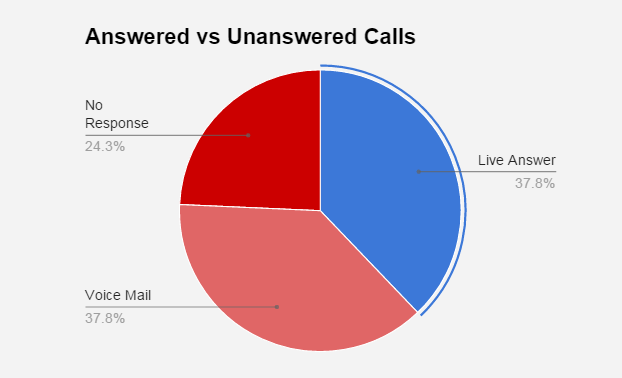
This happens constantly, and most owners have no idea how often. Small businesses answer only about 38 percent of their incoming calls. Of the people who hit voicemail, roughly 85 percent never call back, and around 62 percent go straight to a competitor instead. Your phone is quietly leaking revenue every single day.
There is a fix now, and it actually works. A 24/7 AI phone system answers every call the instant it rings, sounds like a real person, and handles the request instead of just taking a message. The rest of this guide walks through what it is, how it works, where the real value sits, what it still cannot do, and why this matters more than ever for businesses in Saudi Arabia during the year the Kingdom has named the Year of Artificial Intelligence.
So what is 24/7 AI phone automation, really?
Think of it as a tireless receptionist that never sleeps, never takes a break, and never puts anyone on hold. It uses conversational AI to pick up business calls at any hour, understand what the caller wants in plain spoken language, and then do something about it: answer the question, book the appointment, take down the lead, or pass the call to the right person on your team.
The difference from the old phone menus is night and day. Those systems just record a message or shuffle you between options until you give up. An AI voice agent has an actual conversation and finishes the job while you are still on the line. Under the hood it runs on artificial intelligence, natural language processing, and modern voice technology, which is why it feels like talking to a helpful human rather than fighting with a machine.
How does it actually work?
The short version: the AI listens, understands, acts, and replies, all in about a second. Here is what that looks like behind the scenes.
When you speak, speech recognition turns your words into text, the same core technology behind the voice assistant on your phone, just tuned for business calls. Then natural language processing reads that text and works out what you actually want, whether that is booking a slot, asking about a price, checking an order, or reaching the sales team. From there the system takes action, checking a live calendar, pulling an answer from your business information, updating your CRM, or deciding the call really does need a human. Finally, text-to-speech turns the reply back into a warm, natural voice, and you hear a clear answer.
Because it plugs into the tools you already use, it does real work rather than just talking. The caller simply feels like they reached someone who knew what they were doing.
The benefits that actually move the needle
The obvious win is that you stop losing callers. But the real value spreads across revenue, cost, and customer experience, so let me group it that way rather than rattle off a list.
It captures revenue you are currently throwing away. This is the big one. The AI answers on the first ring every time, at 3 a.m., on a Friday, during your busiest rush, and it handles many calls at once so nobody ever hears a busy signal. That matters because the average small business loses somewhere around 126,000 dollars a year to unanswered calls. Speed compounds the effect: 78 percent of buyers purchase from whoever responds first, and replying within a minute converts far better than waiting even half an hour. Since an AI agent answers in real time, you are always the first responder, while your competitor’s voicemail sits there collecting nothing.
And it does not just answer, it sells. The system takes the caller’s name, number, and reason for calling and drops it straight into your CRM, no scribbled notes, nothing lost. It can qualify the lead mid-conversation, separate a serious buyer from a quick question, and book the strong ones onto your calendar before they hang up. If the call drops, a good system fires off a text with a booking link to pull the lead back. Your phone line turns into a pipeline that actually feeds itself.
It costs a fraction of the alternative. A full-time receptionist is expensive once you add salary, benefits, and the gaps for holidays, sick days, and the nights and weekends nobody is at the desk. AI covers all those hours for far less and never asks for a night-shift premium. The math is easy to run for yourself:
Quick ROI check. Say you miss 40 calls a month, and a booked customer is worth 500 to you. If just one in four of those callers would have bought, that is 10 customers, 5,000 in revenue, gone every month. An AI answering service runs a few hundred a month and recovers most of those calls, so the return lands several times above the cost. Your formula: monthly missed calls × your conversion rate × customer value = the money you are leaving on the table.
Most businesses see a strong return inside the first year, and plenty hit payback within weeks once those recovered calls start converting.
It makes every customer feel looked after. People want answers now, and their patience shrinks every year. The AI gives instant, consistent, friendly service on every call, with no hold music and no “your call is important to us.” It says the same accurate thing every time, so the experience does not swing based on who picked up or how slammed the day was. That consistency lifts satisfaction, protects your reputation, and quietly kills off the one-star reviews that come from people who could never reach a human in the first place.
It grows the moment you need it to. Call volume is never flat. A campaign, a seasonal spike, or a viral post can triple your calls overnight, and a human team simply cannot scale that fast. AI does not blink. Ten calls or ten thousand, everyone gets answered at once, and when you open a new branch you just expand the system. This is automation that grows with you instead of becoming the bottleneck.
A couple more capabilities are worth calling out because they quietly do a lot of heavy lifting. Call routing uses intent recognition to send a call to the right person when a human really is needed, and it hands over a summary so your team knows why the caller is reaching out before they even say hello. Appointment booking handles the huge share of calls that are really just scheduling, checking your live calendar, offering open times, booking the slot, and texting a confirmation, with everything landing in the same calendar your staff already uses so there are no double bookings. And for businesses serving more than one language, the AI can switch mid-conversation, which matters enormously in the Gulf. More on why generic Arabic falls short in a moment.
“But doesn’t it sound like a robot?”
It used to. That objection was completely fair a few years ago, when these systems were stilted and maddening. Things have moved fast.
Modern voice AI uses advanced speech recognition and genuinely natural text-to-speech, so agents speak with real tone, rhythm, and warmth. They handle interruptions, follow a tangent, and stay on track. A lot of callers honestly cannot tell. And because the AI only answers from your approved information and follows clear rules, it sidesteps the made-up answers that scared off early adopters. It feels less like a phone tree and more like a capable new hire.
The honest part: what it can’t do
AI phone automation is genuinely powerful, but it is not magic, and pretending otherwise helps no one.
It is not the right tool for every emotional or genuinely complex situation, which is exactly why a good system hands those calls straight to a person. It is only as accurate as the information you give it, so feed it stale details and it will confidently repeat stale details. A truly awful phone connection can still trip it up, though smart systems recover by texting the caller afterward. And the gap in quality between vendors is enormous, which leads to the single most important point for any business in the Gulf:
A system that “supports Arabic” is not the same as a system that understands how people actually talk in Saudi Arabia. Choosing the right one matters more than the decision to use AI at all.
How to roll it out without the pain
A handful of habits separate a deployment that delights customers from one that frustrates them. Map your most common call types first, so the AI is trained on what people actually ask. Give it accurate, current business information and clear rules. Decide upfront which calls it should own and which it should route, then test those handoffs before you go live. Wire it into your CRM and calendar from day one so leads and bookings flow on their own. Pick a solution that truly speaks your customers’ dialect. And keep reviewing the call logs, because the best setups get sharper month after month.
What this looks like in real businesses
The benefits get a lot more concrete once you picture a specific front desk. A few quick scenarios:
A dental clinic gets a flood of calls at lunch and after closing, exactly when the reception desk is empty. Roughly 45 percent of its calls land outside 9-to-5. With an AI agent answering, a patient with a toothache at 8 p.m. books a morning slot instead of calling the practice down the road, and the clinic stops bleeding new-patient value it never even knew it was losing.
A home-services company has its technicians on job sites all day, hands full, phone ringing in the truck. These businesses miss around a quarter of their calls on average, and during a heatwave or a burst-pipe cold snap that number climbs fast. The AI catches every one, qualifies the urgent jobs, and books them, so the owner walks into a full schedule rather than a list of missed-call notifications.
A real estate brokerage lives and dies on speed-to-lead. A buyer who calls about a listing and hits voicemail will simply ring the next agent, and most go with whoever picks up first. An AI agent answers instantly, captures the lead, qualifies the budget, and books the viewing while the interest is hot, even when every agent is already out showing property.
An online retailer drowns in repetitive “where is my order” and “how do I return this” calls, especially during a sale. Instead of hiring a seasonal call team, the AI handles the routine questions at any volume and escalates the genuinely tricky cases, keeping service steady when traffic triples.
Different industries, same pattern: the calls that used to slip away now turn into booked appointments, captured leads, and customers who feel taken care of.
Why this lands differently in Saudi Arabia
There may be no better moment or place for this technology than Saudi Arabia right now. The Kingdom has officially named 2026 the Year of Artificial Intelligence, and AI sits at the very center of Vision 2030. Through SDAIA, the government has built the national strategy, the infrastructure, and the talent programs to back it up, and AI is projected to add a major slice of GDP by 2030. For a Saudi business, adopting AI is no longer getting ahead of the curve. It is simply moving in the same direction as the country.
Saudi customers, meanwhile, expect service that is fast, respectful, personal, and in their own language. Businesses in Riyadh, Jeddah, and Dammam compete in a fast-moving market where responsiveness is the differentiator, and phone and WhatsApp are still primary ways people reach a company. A missed call or a slow reply stings just as much here as anywhere, arguably more, given how high expectations have climbed.
The Arabic problem nobody else talks about
Here is what global vendors quietly skip over: Arabic is hard for AI. Most large language models were trained mostly in English, and Arabic brings real complexity, including a wide gap between formal written Arabic and the way people actually speak out loud. A system that only handles standard Arabic, or leans on clumsy translation, will misread callers and feel cold and foreign.
For a Saudi business, that dialect gap is the whole game. It is the difference between a caller feeling understood and a caller hanging up. Native Gulf Arabic understanding is not a bonus feature. It is the requirement.
What “built for Saudi” looks like in practice
A useful example here is Ehlan.ai, a Saudi-based AI voice agent platform, and it is worth looking at not as a pitch but because it shows what local actually means. Ehlan.ai is built around native Arabic conversations with real Gulf dialect understanding, so a caller can speak naturally and feel understood from the first word. Its agents use human-like voices and answer around the clock, which tackles the missed-call and after-hours problem head on. Beyond answering, it qualifies leads, books appointments against a live calendar, and automates routine support across calls, WhatsApp, and SMS, and it connects to your existing number and tools so you can go live in hours rather than running an IT project.
What makes it a good illustration is the pairing. It brings every universal benefit in this guide, instant answering, lead capture, scheduling, lower cost, together with the one thing a Saudi business cannot compromise on: a voice that genuinely sounds local. For a clinic in Riyadh, a brokerage in Jeddah, or a shop in Dammam, that combination is what turns AI phone automation from a nice idea into a real upgrade in how customers are treated. And it is not alone. Several Saudi-focused providers now compete here, which is a healthy sign of a maturing market and gives businesses genuine choice.
That fit with Vision 2030 is not a coincidence. The Vision is about diversification, efficiency, and a knowledge-based economy, and AI phone automation pushes on all three at the level of a single business. It raises productivity, lowers cost, deepens customer engagement, and lets a company scale, the exact kind of digital transformation the Kingdom is encouraging. Adopting it is a small, practical way to line one business up with a national ambition.
Frequently Asked Questions
What is a 24/7 AI phone answering service?
It is an automated system that uses conversational AI to answer business calls at any hour. It greets callers, understands their needs in natural language, answers questions, books appointments, captures leads, and routes complex calls to a human, all without a live agent.
How does an AI voice agent work?
It converts the caller’s speech to text, uses natural language processing to understand intent, takes action such as checking a calendar or updating a CRM, then replies in a natural-sounding voice. Each step happens in about a second, so the call feels smooth.
Is AI phone automation worth it for small businesses?
For most, yes. It recovers missed calls, responds faster than competitors, and costs far less than staffing the same hours. Since missed calls can cost a small business well over 100,000 a year, the return is usually several times the monthly cost.
Can AI answer calls in Arabic?
Yes, but quality varies a lot. Many generic systems only handle standard Arabic and struggle with everyday speech. For Saudi businesses, choose a solution with native Gulf Arabic dialect understanding, such as Ehlan.ai, so callers feel understood.
Will customers know they are talking to AI?
Often they will not. Modern voice AI sounds natural, with realistic tone and pacing, and handles interruptions and follow-up questions. Most callers care about getting fast, accurate help, which a good system delivers.
How much does an AI receptionist cost?
It typically costs a few hundred per month, far less than a full-time receptionist once you include salary, benefits, and after-hours coverage. Many Saudi businesses report cutting reception costs significantly while gaining 24/7 coverage.
Can AI book appointments and qualify leads?
Yes. It checks your live calendar, offers open times, books the slot, and sends a confirmation. It also asks intake questions, qualifies serious buyers, logs them in your CRM, and can follow up by text if a call drops.
What are the limitations of AI phone automation?
It is not designed for every complex or emotional situation, so it should route those to a human. It needs accurate setup and information, and language quality depends heavily on the vendor. Choosing a system that truly speaks your customers’ dialect is essential.
Conclusion
Every unanswered call is a customer walking into a competitor’s door. You have already paid to make the phone ring, so the real question is whether you are there to answer it. 24/7 AI phone automation makes sure you always are. It answers instantly, sounds human, captures leads, books appointments, and serves customers around the clock, all while lowering your costs and scaling with your growth.
For businesses in Saudi Arabia, the timing could not be better. With 2026 named the Year of Artificial Intelligence and Vision 2030 driving digital transformation, adopting AI voice technology is both a smart business move and a step in step with the Kingdom’s direction. The one rule that matters most here is language. Your customers should hear a voice that truly speaks like them.
If you have been losing calls, leads, or sleep over after-hours coverage, now is the time to see what a modern AI voice agent can do. Explore a solution built for Saudi businesses and real Gulf Arabic conversations, such as Ehlan.ai, and start turning every call into an opportunity instead of a missed one.

As a writer for the Ehlan.ai blog, Hassan connects marketing strategy with AI voice technology. He helps business leaders learn how to attract, engage, and win customers in a world where automation gives companies the edge. His articles come from real campaign experience, deep knowledge of the region, and a clear view of how AI is changing the way brands talk to customers.
When he is not writing, Hassan follows the latest news from Riyadh's fast growing AI and tech scene and shares the most useful insights with the Ehlan.ai community
- AI Voice Agents for Real Estate Lead Qualification - September 27, 2026
- LEAP 2026 Saudi Arabia Review: What Really Happened and What It Means for Your Business - September 10, 2026
- Ehlan.ai AI Voice Agents vs Human Receptionists: Cost Comparison in KSA - September 6, 2026